

Blog
How to Get Your Garden World Cup Ready This Summer
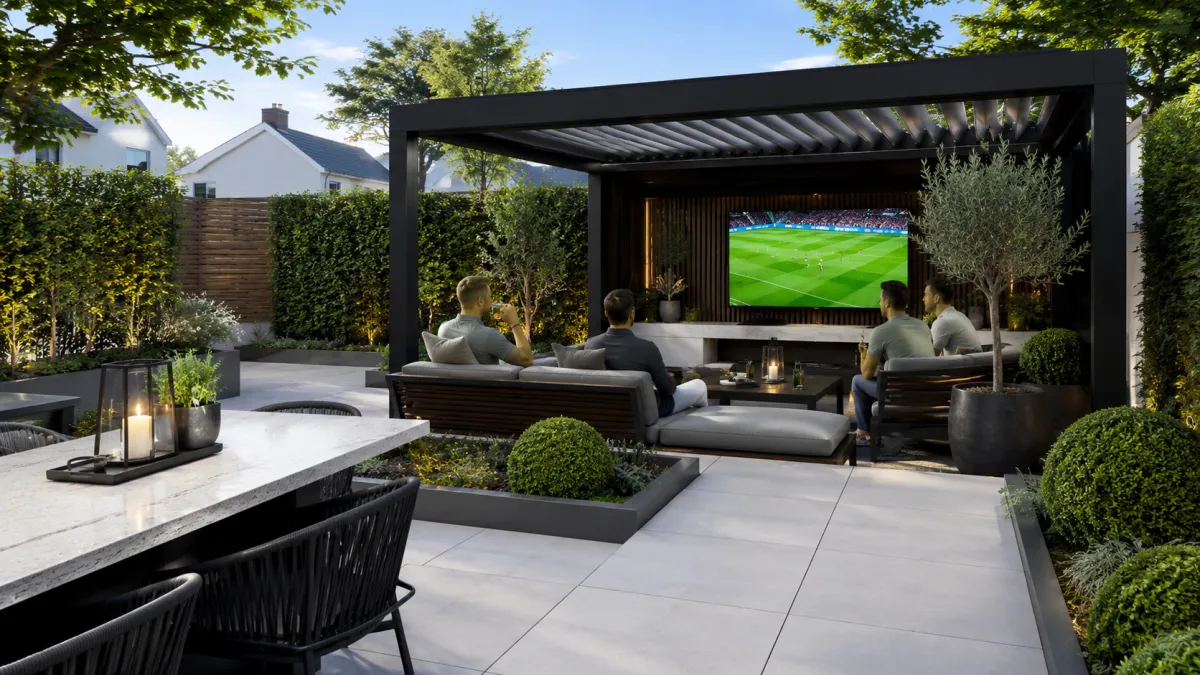
If you are planning to watch the football outdoors this summer, a World Cup ready garden is not just about hanging a flag and wheeling out a barbecue. It is about creating a space that feels comfortable before kick-off, practical during the match, and easy to tidy when the last guest heads home. At Peninsula Stone, we spend a lot of time helping Dublin homeowners turn underused gardens into places that work for real life, whether that means family dinners, quiet evenings, or bigger social occasions. The same thinking applies here: if the layout, surfacing, shelter and lighting are right, your garden can feel every bit as enjoyable as the living room.
The key is to focus on how people will actually move, sit, eat and relax in the space. A garden that looks great in a photo can still feel awkward on a busy match day if the seating faces the wrong way, cables run across the patio, or there is nowhere dry to stand when the weather turns. In this guide, we will walk through the practical upgrades that make the biggest difference, from zoning and drainage to pergolas, patios and outdoor cooking areas.
Start with the match-day layout, not the decoration
The best gardens for entertaining usually begin with layout rather than styling. Before you think about cushions, planters or a drinks station, think about where the screen will go, where people will sit, and how they will move around the space without blocking the view. In our experience, most hosting problems come from poor circulation rather than lack of furniture.
A simple way to plan this is to divide the garden into zones. One zone is for watching the match, one for food and drinks, and one for overflow seating or standing. If your garden is compact, those zones can overlap, but there should still be a clear sense of purpose. Guests should not need to cross directly in front of the screen every time they want another drink.
If you are working with an existing patio, check whether it naturally supports a viewing area. A rectangular seating arrangement often works better than a loose scatter of chairs because it keeps sightlines cleaner. Where the garden needs more structure, a proper garden design plan can help you organise the space so it works for entertaining as well as day-to-day use.
Think about scale too. A small table with too many seats quickly makes a space feel cramped, while oversized furniture can swallow the patio and leave no room for movement. The most successful outdoor hosting spaces usually feel slightly simpler than people expect. Fewer, better-positioned pieces nearly always beat trying to squeeze in too much.
Make sure the patio and surfaces are safe in Irish summer weather
A World Cup ready garden has to work in real weather, not ideal weather. In Dublin, that means accepting that even a summer match can bring drizzle, damp air or a slippery patch underfoot. This is where the quality of your paving, drainage and detailing starts to matter.
If your main entertaining area is old, uneven or slow to drain, it is worth addressing that before the tournament starts. Standing water around seating or near power leads is not just inconvenient; it can make the space less safe and less inviting. We always recommend looking at the fall of the patio, the condition of the joints, and whether the sub-base is still doing its job. If there are signs of rocking slabs, pooling water or surface algae, it may be time for repair or replacement rather than another temporary fix.
Material choice matters as well. Porcelain and well-finished natural stone can both work beautifully for outdoor living, but they need to be installed correctly and chosen with slip resistance and maintenance in mind. Costs vary depending on materials, site conditions, and location — always get a written quote. If you are planning a more substantial upgrade, our patio design and installation service is often where homeowners start when they want an entertaining space that looks smart and performs properly.
For existing patios, a careful clean may be enough, but avoid over-aggressive DIY washing on delicate stone. Surfaces, sealers and jointing compounds all respond differently, and there is usually a trade-off between a quick cosmetic result and long-term durability. That is one of those areas where honest advice saves money later.
Add shelter, shade and lighting so kick-off time does not matter
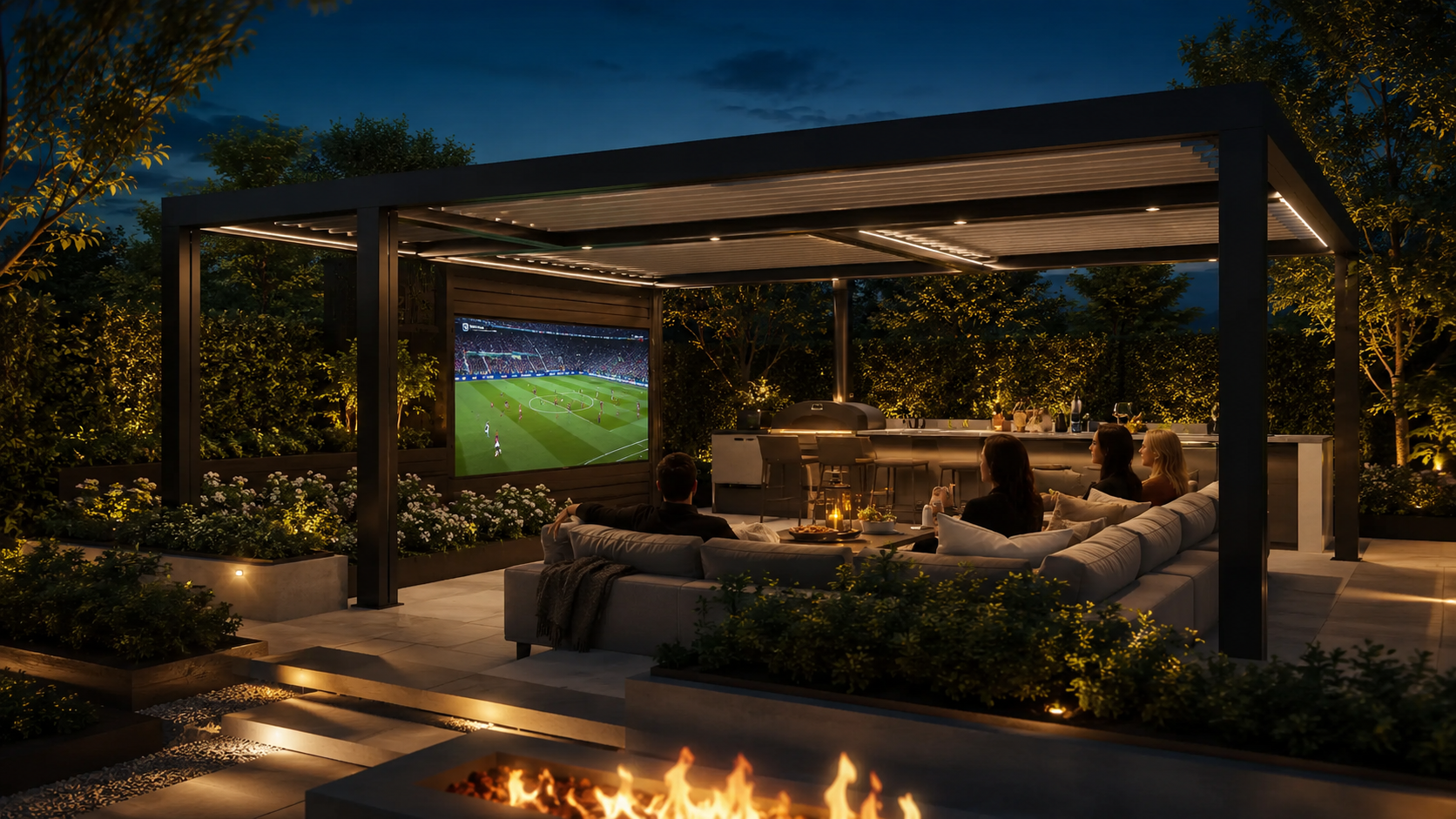
If there is one upgrade that changes how often people actually use their garden, it is shelter. A good pergola or covered seating area makes the space less dependent on the forecast, gives a screen some protection from glare, and makes evening hosting feel more settled. For many gardens, it is the difference between "we might use it if the weather holds" and "let's set it up outside anyway".
There are a few ways to approach this. A wall-attached pergola can create a strong connection to the house, which is useful if you are carrying food in and out. A freestanding structure can work well when you want to anchor a separate seating zone deeper in the garden. Larger or permanent structures may bring planning or structural considerations, so it is sensible to check the current rules through Citizens Information guidance on exempted development and get professional advice where the design becomes more complex.
Lighting deserves just as much thought. Match days often roll into late evenings, so layered lighting tends to work better than one bright fitting. Low-level step or border lighting helps with movement, while warm overhead or wall lighting keeps the seating area comfortable. Any outdoor electrics should be installed by a qualified professional; the safety guidance from Safe Electric is a useful baseline if you are planning changes. We never recommend improvising exterior sockets or temporary cable runs where moisture and foot traffic are involved.
If you want a garden that keeps working after the football is over, a well-designed pergola is one of the most versatile investments you can make. It adds structure, comfort and a clear focal point without making the space feel overbuilt.
Create a hosting zone for food, drinks and easy clean-up
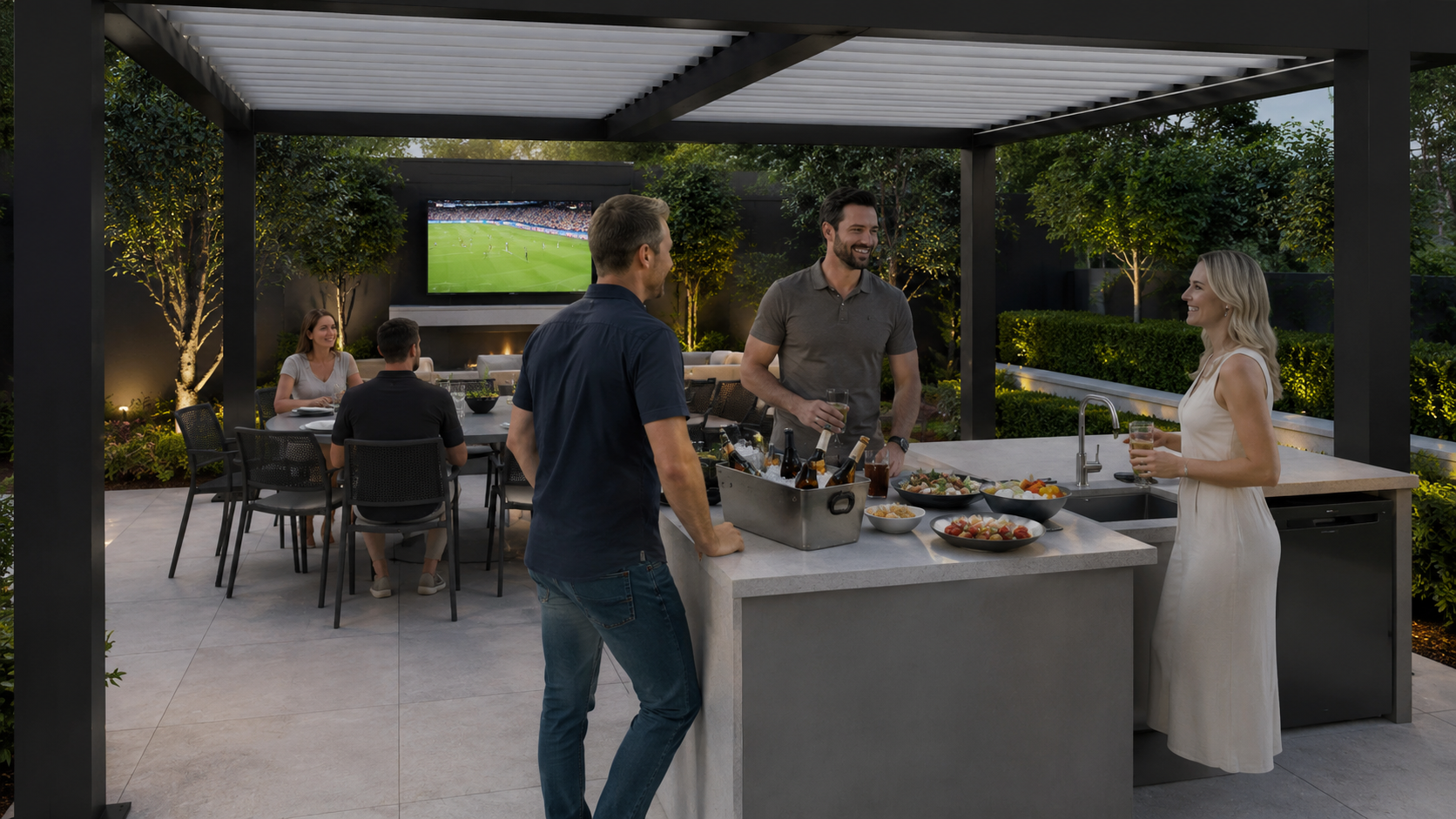
Watching a match outdoors is far more enjoyable when the hosting side of it feels effortless. That usually means thinking beyond a portable grill and asking where drinks will stay cold, where serving dishes will sit, and where rubbish or recycling can go without cluttering the main seating area.
A simple service zone near the house is often enough for smaller gatherings. For bigger spaces or households that entertain regularly, an outdoor kitchen or preparation counter can make a real difference. It keeps the host in the conversation, reduces constant trips through the house, and makes the whole setup feel more deliberate. If that is the direction you are considering, Peninsula Stone also designs and builds outdoor kitchen spaces that sit naturally within a wider garden layout.
Storage matters more than people expect. Blankets, serving boards, cushions and even extension leads all need somewhere to live when the event ends. Built-in benches with storage, compact cabinets and discreet screening panels can all help. This is one of those practical details that separates a garden that only works once from one that is easy to use all season.
It is also worth being realistic about servicing and utilities. Gas appliances, fixed electrics and plumbing all need proper design and installation. We always advise using certified professionals for gas and electrical work, and allowing for ventilation, safe clearances and weather protection from the start rather than retrofitting them later.
Use planting and styling to make the space feel festive without dating it
The strongest entertaining gardens usually avoid theme-heavy decoration and focus instead on atmosphere. That is especially useful for a World Cup ready garden because you want the space to feel exciting for the tournament without looking tired once it ends. Colour, texture and flexible accessories do that far better than one-off novelty pieces.
Planting can help define zones and soften hard landscaping. Taller grasses or structured evergreen planting can create a sense of enclosure around a seating area, while pots near an entrance or screen zone make the space feel finished. In smaller Dublin gardens, layered planting often makes the whole layout feel more generous by drawing the eye outward rather than letting everything collapse into one flat view.
Textiles and movable elements are where you can nod to the occasion. Throws, cushions, lanterns and table styling are easy to switch in and out. We generally recommend building the permanent parts of the garden around timeless materials and then using seasonal accents for personality. That gives you the best of both worlds: a garden that feels current now and still relevant next year.
There is also a practical side to planting. If guests will be moving around in the evening, avoid thorny plants close to paths and choose species that can cope with occasional foot traffic nearby. Fragrance, movement and texture often do more for atmosphere than bright colour alone.
Think about viewing, power and weatherproof details before guests arrive
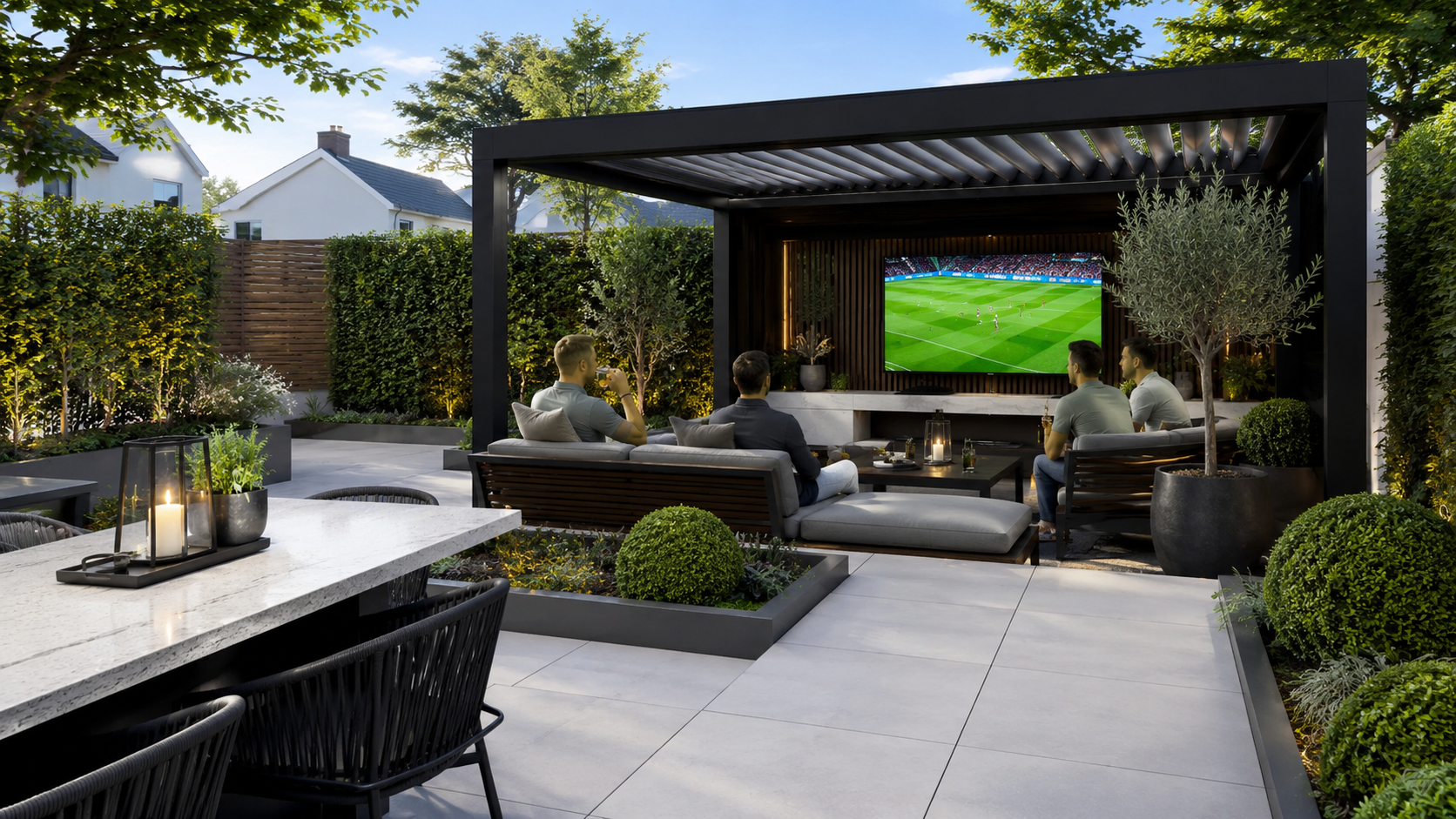
Some of the most important upgrades are the least glamorous. If you are using a screen outside, test it in daylight and from multiple seating positions. Reflections, glare and awkward viewing angles can ruin the experience even in a well-designed garden. Shade, screen placement and the backdrop behind the viewing area all matter.
Power access should be planned, not improvised. Permanent outdoor sockets installed to the right standard are much better than trailing temporary leads from inside the house. If a lead does have to cross a walkway for a one-off event, it should be protected and positioned carefully, but that is still a compromise rather than a long-term solution.
Weatherproof storage for cushions, speaker equipment and throws can save a lot of last-minute stress if the forecast changes quickly. In our experience, the best entertaining spaces are not always the most expensive ones; they are the ones where the practical details have already been solved. That includes drainage, cable routes, furniture spacing, and where muddy shoes or wet jackets will end up.
This is also a good point to decide whether your garden just needs a refresh or whether it wants a fuller rethink. If the screen location only works because everything else is being forced around it, that is often a sign that the overall layout could be improved.
A quick World Cup ready garden checklist before the first match
If the tournament is coming up fast, use this simple sequence to get the essentials right without overcomplicating it:
Set the viewing position first. Test sightlines, glare and circulation before moving any furniture permanently.
Check the ground underfoot. Clean slippery areas, note drainage issues and make sure the main path is stable and safe.
Add weather protection. Use a pergola, canopy or covered area where possible so a short shower does not end the evening.
Plan the hosting zone. Decide where food, drinks, serving space and waste will go so the seating area stays uncluttered.
Sort lighting and power properly. Use qualified professionals for any permanent electrical work and test everything ahead of time.
Finish with comfort. Cushions, throws, planters and warm lighting make the space feel welcoming once the practical side is handled.
That sequence works because it follows how the garden is actually used. We use a similar thought process on real outdoor living projects: solve function first, then refine the feel of the space.
FAQ: getting your garden World Cup ready
How early should I start preparing my garden for summer entertaining?
Ideally, start a few weeks ahead rather than leaving it to the final few days. That gives you time to test the layout, clean or repair surfaces, and sort any electrical or lighting work properly. If you are planning a larger change such as a pergola, patio upgrade or outdoor kitchen area, start much earlier because design, materials and installation all take time.
What is the best surface for a garden entertaining area?
That depends on the look you want, how the garden drains, and how much maintenance you are happy with. Porcelain is popular for its clean finish and low maintenance, while natural stone brings character and texture. The installation quality matters just as much as the material, especially when the area will be used in mixed weather.
Do I need planning permission for a pergola or covered seating area?
Sometimes no, but it depends on the size, position and specification of the structure. Rules can change, and wall-attached or more permanent designs need careful thought. It is always worth checking the current planning guidance and getting professional advice before committing to a build.
Can I run an outdoor television and lighting from standard house sockets?
You may be able to for a temporary setup, but permanent or repeated use should be planned properly. Outdoor electrics need to be suitable for the environment and installed safely. We strongly recommend using a qualified electrician for any lasting solution, especially where moisture, foot traffic and extension leads are involved.
What if my garden is too small for a full entertaining setup?
A smaller garden can still work very well if the layout is thoughtful. In compact spaces, it is even more important to keep the furniture simple, use vertical structure like screens or pergolas carefully, and make every area do more than one job. A clear layout usually matters more than the overall size.
Is it worth upgrading the garden just for one summer event?
It is worth upgrading if the changes will still improve how you use the garden afterwards. Better surfacing, shelter, lighting and seating layout all keep adding value long after the tournament ends. Temporary decoration is fine, but the best investment is usually in the features that make outdoor living easier every season.
Final thoughts
A World Cup ready garden should feel good before the first whistle and still feel useful once the competition is over. The smartest approach is to treat the tournament as a reason to improve how the garden works overall: clearer layout, better shelter, safer surfaces, and a hosting setup that feels easy rather than improvised. That way, you are not creating a one-off party backdrop; you are creating a better outdoor living space.
If you would like help turning your garden into a space that is ready for summer entertaining, family time and everyday use, you can book a consultation with Peninsula Stone. We can help you plan a garden that looks the part, works in Irish weather, and feels built around how you actually live.

Portfolio
Project 1
Lorem ipsum dolor sit amet, consectetur adipiscing elit. Sed ut rhoncus nibh. Quisque sollicitudin lectus lectus, non lobortis libero gravida non. Fusce erat dolor, gravida id dui et, sagittis interdum purus. In tincidunt lacus nec commodo finibus.
Integer suscipit justo magna, ac efficitur lacus convallis eu. Pellentesque sed lectus odio.
Project 2
Project 3
Project 4
Want to book a consultation?
Check our availability and set up a time to meet with us to discuss your project!
We are a company based in Dublin, Ireland that specialises in the supply, design, build, and maintenance of all things garden. Our team is dedicated to bringing you the highest quality garden products and services to fulfil all of your hard landscape needs. We are confident that you will be satisfied with the quality of our products and services, and we look forward to working with you to create the perfect outdoor space. Thank you for choosing us!
Follow Us:
© Copyright 2026 Peninsula Stone Limited. All rights reserved.