

Blog

Garden Pergolas Dublin: How to Choose the Right One
If you are researching Garden Pergolas Dublin, you are probably trying to strike the right balance between looks, shelter, budget, and long-term practicality. A pergola can transform how a garden feels, but only if the structure suits the house, the site, and the way you actually plan to use the space. At Peninsula Stone Landscapes, we design outdoor spaces for Dublin homes where proportion, drainage, fixing details, and durability all matter. In this guide, we look at materials, layout choices, planning considerations, roofing options, maintenance, and realistic cost ranges so you can make a well-informed decision.
Why Garden Pergolas Dublin homeowners are choosing them
A well-designed pergola does more than create shade. It gives the garden structure, frames a seating or dining area, and helps the whole space feel intentional rather than pieced together. In smaller Dublin gardens, that sense of definition can make the layout feel more resolved and more spacious at the same time.
We have found that pergolas are especially valuable when clients want to create a proper outdoor room without fully enclosing the space. That might mean a dining area off the kitchen, a quieter seating zone at the back of the garden, or a covered transition between the house and the patio. The best results come when the pergola is treated as part of the landscape design, not an afterthought bolted on at the end.
They also work across a wide range of house styles. A slimline aluminium system can suit a contemporary extension beautifully, while a carefully detailed timber pergola may sit more naturally in a softer garden with natural stone underfoot. The right answer depends on context, not trend.
Timber, aluminium, and composite pergolas compared
Timber pergolas
Timber pergolas have warmth and character that many homeowners still love. They can feel softer and more natural in planted gardens, and they pair particularly well with paving materials such as sandstone and limestone. If the rest of the garden has a more organic, crafted feel, timber often looks more at home than powder-coated metal.
The trade-off is maintenance. Timber needs proper specification from the start, then ongoing care afterwards. Depending on the species, finish, and exposure, that may mean cleaning, re-oiling, re-staining, or checking for movement over time. In our experience, timber can age beautifully, but only if the owner is realistic about that commitment.
Aluminium pergolas
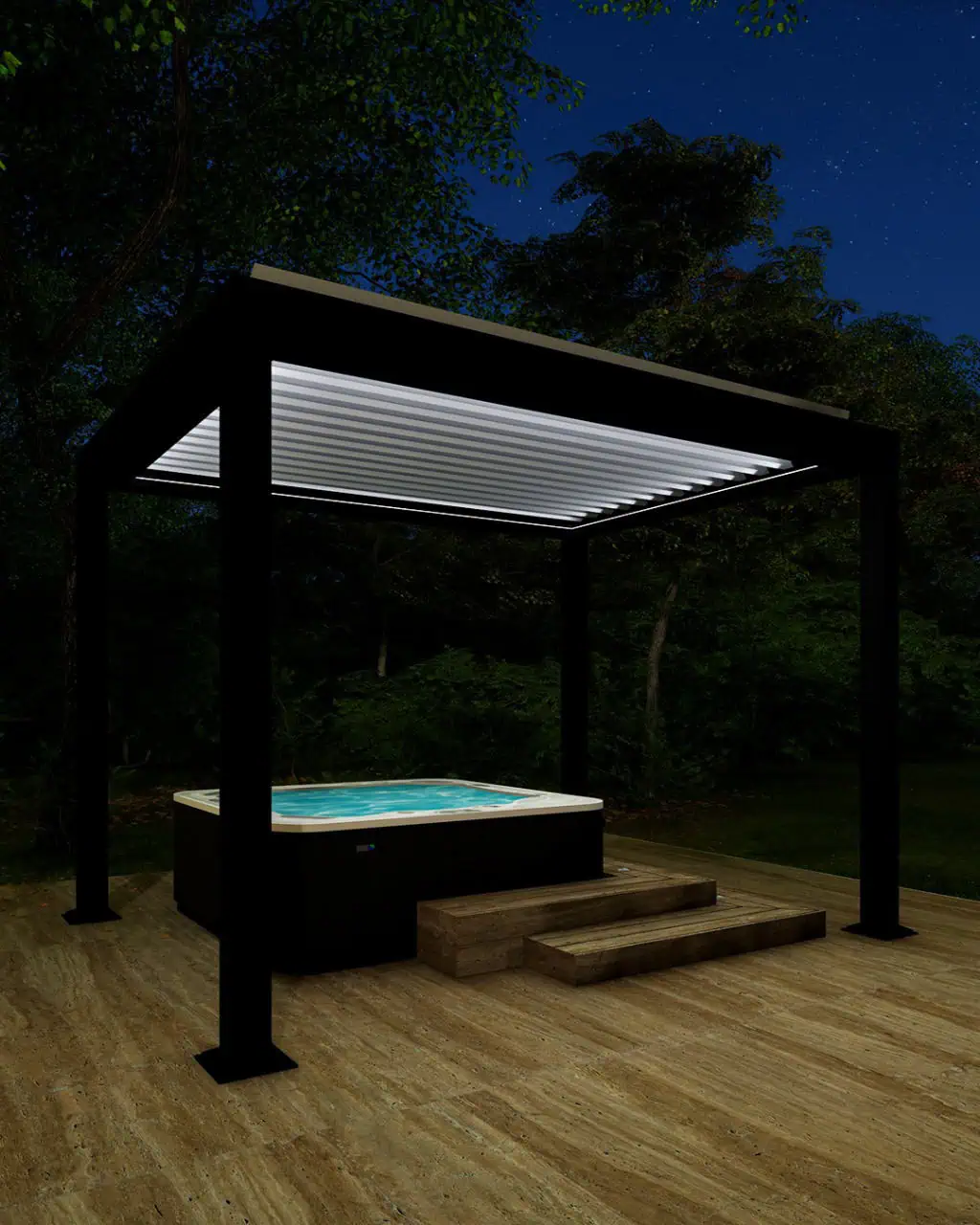
Aluminium pergolas are often the most practical option for Dublin homes that want a clean, contemporary finish with less upkeep. A good powder-coated aluminium frame resists rot, stays stable, and usually gives a sharper overall line. It also works well when integrated lighting, screens, or louvred roofs are part of the design.
That does not mean every aluminium pergola is equal. Product quality, coating standard, fixing details, and drainage design all matter. Manufacturer guidance shows how much the details around roof design, drainage, and finish quality affect long-term performance.
Composite pergolas
Composite pergolas can sit somewhere between the two. They are often chosen by homeowners who like the softer appearance of timber but want to reduce ongoing maintenance. That said, performance varies by product, and some systems are much stronger and better finished than others.
Composite is not automatically the best of both worlds. We would want to assess how the specific product handles weathering, colour stability, expansion, and structural spans before recommending it. As with most outdoor materials, the specification matters just as much as the headline label.
Freestanding or wall-attached: which layout works best?
One of the biggest design decisions is whether the pergola stands on its own or connects back to the house. Both can work well, but they solve different problems.
Freestanding pergolas
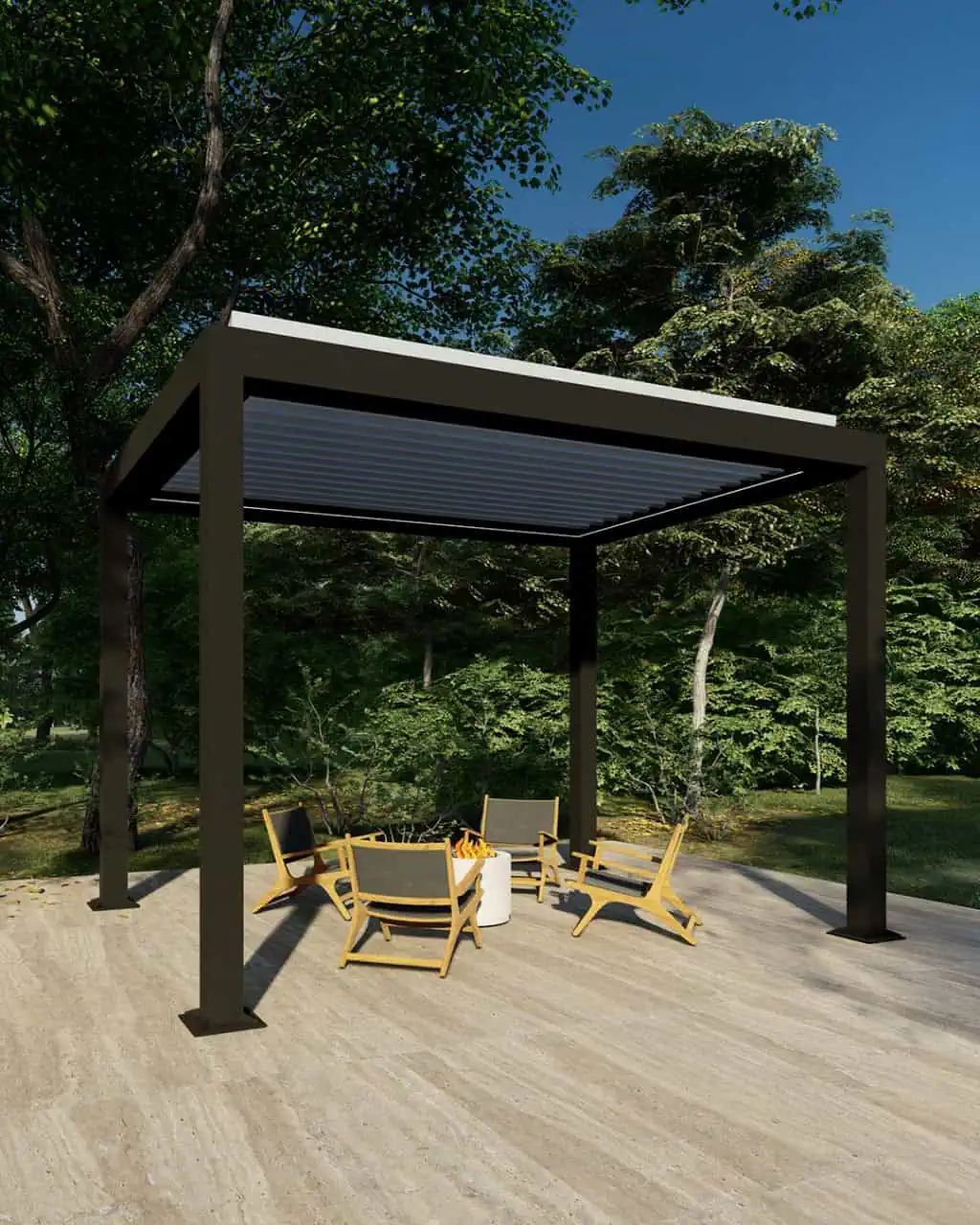
A freestanding pergola gives you more freedom with placement. It can sit deeper in the garden, frame a dining terrace, or create a destination at the far end of the plot. This works especially well when you want the pergola to pull people away from the back door and make the whole garden feel properly used.
Freestanding structures also avoid some of the complexity that comes with attaching into an existing wall. Even so, the base design still matters. Post positions, anchoring, and how the structure meets the patio all need to be planned carefully if you want the finished space to feel clean and intentional.
Wall-attached pergolas
A wall-attached pergola can make sense where the goal is to extend the house visually into the garden. Done well, it can create a very usable outdoor dining or lounge area right outside the kitchen or living room. For family use, that proximity is often a major advantage.
But this is also where we become more cautious. Once a pergola attaches to the house, fixing details, waterproofing, load paths, and the condition of the existing wall all become more important. Older walls, external insulation, and previous extension work can all complicate the detail. For larger or more complex installations, professional design and installation are the sensible option.
As a practical example, we recently advised on a south-facing Dublin garden where the client first wanted a large wall-attached pergola spanning the full rear elevation. On paper it sounded straightforward. On site, the wall condition, drainage fall, and roofline relationships suggested a better answer: a slightly smaller pergola set just off the house with a clearer patio threshold. It gave the same outdoor-living feel, but with fewer structural compromises and a cleaner result.
Planning permission, foundations, and safe installation
This is the part many people rush, and it is often where the problems start. A pergola may look simple above ground, but good work happens below and behind the visible finish.
Planning considerations in Dublin
Planning permission is not a box to tick at the end. In Dublin, some domestic garden structures may fall within exempted development rules, but exemptions depend on the specific property and proposal. Size, height, siting, total site coverage, whether the structure is attached to the house, and whether the property has special protections can all change the answer.
Because of that, we never advise clients to assume a pergola is exempt just because another homeowner built one nearby. If there is any doubt, check with your local planning authority before work starts. The general homeowner guidance on planning permission in Ireland is a useful starting point, but larger structures and site-specific questions still need professional advice.
Foundations and post anchoring
The structural base matters as much as the frame itself. Post anchors need to suit the load, the finished surface, and the ground conditions. A pergola installed over paving should not simply be treated as a bolt-on accessory. The patio build-up, the slab, and the sub-base all need to be understood before anchors go in.
We have seen attractive pergolas let down by weak post positions, awkward pad details, or movement caused by poor groundwork. That is one reason we prefer to think about the pergola early in the project, not after the patio is already built. Better coordination nearly always produces a better finish.
When professional installation is the right call
For small decorative structures, some homeowners may consider a DIY route. But if the pergola is wall-attached, unusually large, integrated with lighting, or expected to provide meaningful shelter, professional installation is usually worth it. You are not just paying for assembly. You are paying for judgement, detailing, and fewer expensive mistakes.
Roofing options, maintenance, and year-round comfort
The roof detail often decides whether a pergola is mostly decorative or genuinely useful. There is no single right answer, but each option brings different strengths and limitations.
Open slat pergolas
An open slat pergola offers visual structure and light shade. It is often the simplest and most elegant option where the goal is to define space rather than create full shelter. The downside is obvious: it will not keep out Dublin rain, and it offers limited weather protection outside the best days of the year.
Polycarbonate roofs
Polycarbonate roofing can be a practical mid-point. It allows light through while offering basic rain cover, and it can work well where homeowners want better usability without the cost of a more advanced louvred system. The look is not for everyone, though, and lower-end installations can feel more utilitarian than premium.
Louvred and glazed roofs
Louvred roofs give you more control. Depending on the system, you can manage sunlight, ventilation, and rainwater more effectively, which makes the pergola far more usable across the year. Glazed options can also work, though glare, heat gain, and cleaning need to be considered as part of the design.
For year-round comfort, we also think about orientation, prevailing wind, nearby boundaries, and how people move between the house and the garden. Lighting, privacy screens, and heating may all be worth considering, but only if the basic layout is right first.
Maintenance by material
Timber pergolas need the most regular attention. That may include washing down, checking joints, and renewing protective finishes. Aluminium pergolas are usually easier: routine cleaning, inspection of moving parts where relevant, and periodic checks on drainage outlets and fixings. Composite systems typically sit in the middle, though maintenance needs depend on the brand and finish.
Honesty matters here. If you want the least involvement after installation, aluminium is usually the stronger fit. If you value natural character more than convenience, timber can still be the better choice. It depends on what you are optimising for.
What Garden Pergolas Dublin projects typically cost
Cost is one of the first questions homeowners ask, and rightly so. For a professionally installed pergola in Dublin, a straightforward smaller structure may start from around €4,000 to €7,000. Mid-range projects with stronger materials, better detailing, and a more integrated design often sit around €7,000 to €14,000. Larger bespoke installations, especially premium aluminium systems with louvred roofs, lighting, screens, or integrated outdoor-living features, can easily reach €14,000 to €20,000+.
Those are ranges, not fixed promises. Costs vary depending on materials, site conditions, and location — always get a written quote. Ground preparation, drainage changes, service runs, awkward access, bespoke fabrication, and roofing specification can all move the figure materially.
We would also caution against comparing pergolas on headline size alone. Two structures of similar width can have very different costs once you factor in finish quality, engineering, roof type, installation detail, and how well they are integrated into the rest of the garden. In our experience, the cheapest quote is often the one that leaves out the detail that makes the space work properly.
Where the pergola is part of a larger outdoor-living scheme, it is also worth looking at it alongside the rest of the build. A pergola tied into garden design in Dublin, a new patio installation, or a broader seating layout can often deliver a better result than treating it as a stand-alone purchase.
Frequently asked questions about garden pergolas in Dublin
Do I need planning permission for a pergola in Dublin?
Sometimes, but not always. In Dublin, some small garden structures may fall within exempted development rules, but that does not mean every pergola is automatically exempt. Height, position, total garden coverage, proximity to boundaries, and whether the structure is attached to the house can all matter. If the property is protected, in an architectural conservation area, or the design is unusually large, we would always advise checking with your local planning authority before you build.
What is the best material for a pergola in Dublin?
There is no single best material for every garden. In our experience, aluminium is the lowest-maintenance option and suits modern Dublin homes very well. Timber has more warmth and character, especially in softer garden schemes, but it needs more regular care. Composite can work in some designs, though product quality varies, so it is worth reviewing the manufacturer specification before you commit.
Are aluminium pergolas better than timber pergolas?
They are better for some priorities, but not all. Aluminium pergolas are usually easier to maintain, more consistent in finish, and often a stronger fit for contemporary gardens. Timber pergolas can feel richer and more natural, especially beside stone paving and mature planting. The right answer depends on the style of the house, the exposure of the site, and how much ongoing maintenance you are happy to take on.
How much does a garden pergola cost in Dublin?
For a professionally installed pergola in Dublin, many projects fall somewhere between about €4,000 and €20,000+, depending on size, material, roof type, lighting, groundwork, and whether the structure is bespoke or modular. Large premium aluminium systems with louvred roofs and integrated extras can go beyond that. Costs vary depending on materials, site conditions, and location, so always get a written quote.
Can a pergola be used all year round?
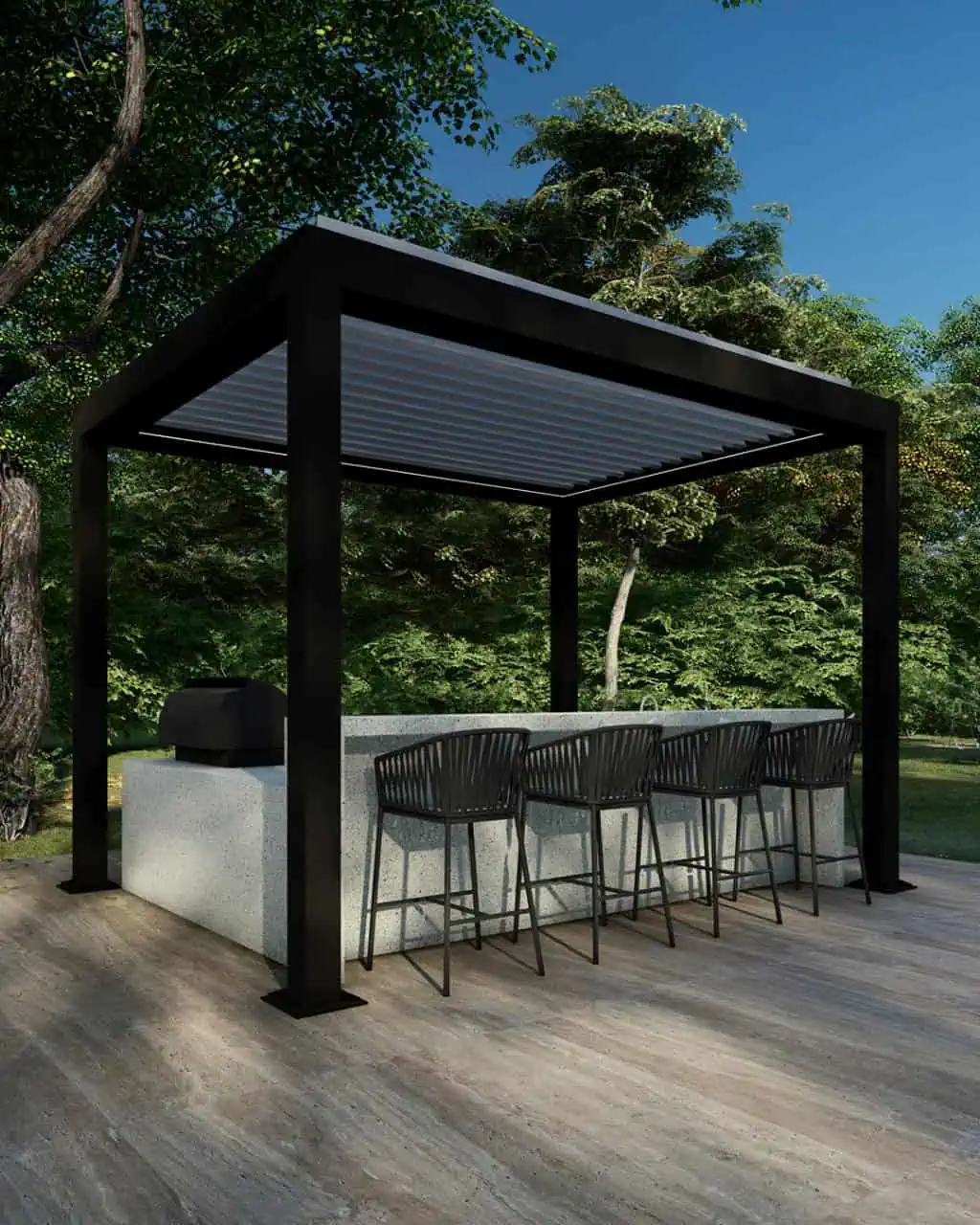
Yes, if it is designed properly. An open slat pergola gives light shade and definition, but it will not offer the same shelter as a louvred, glazed, or polycarbonate-roofed system. For year-round use in Dublin, we usually look at shelter from wind, drainage around the base, lighting, heating options, and how the pergola connects to the patio or outdoor kitchen area. Good design matters more than the label alone.
Is a wall-attached pergola safe for every house?
No. A wall-attached pergola can work brilliantly, but only if the existing wall, fixing points, waterproofing details, and load paths are properly assessed. We would not recommend guessing with fixings on older walls, external insulation, or awkward extensions. Where a pergola is large or structurally sensitive, professional design and installation are the sensible route.
Ready to plan the right pergola for your garden?
The best Garden Pergolas Dublin projects are not just about choosing a frame. They are about choosing the right material, the right position, the right roof detail, and the right level of shelter for the way you actually live. If you want a pergola that feels properly integrated with your patio, planting, and outdoor-living space, it is worth taking the time to get the design right from the start.
If you are weighing up options, you can explore bespoke pergola installation in Dublin, browse pergola ideas for North Dublin gardens, or request a landscaping quote for advice on what would suit your garden best.

Portfolio
Project 1
Lorem ipsum dolor sit amet, consectetur adipiscing elit. Sed ut rhoncus nibh. Quisque sollicitudin lectus lectus, non lobortis libero gravida non. Fusce erat dolor, gravida id dui et, sagittis interdum purus. In tincidunt lacus nec commodo finibus.
Integer suscipit justo magna, ac efficitur lacus convallis eu. Pellentesque sed lectus odio.


Project 2
Project 3
Project 4
Want to book a consultation?
Check our availability and set up a time to meet with us to discuss your project!
We are a company based in Dublin, Ireland that specialises in the supply, design, build, and maintenance of all things garden. Our team is dedicated to bringing you the highest quality garden products and services to fulfil all of your hard landscape needs. We are confident that you will be satisfied with the quality of our products and services, and we look forward to working with you to create the perfect outdoor space. Thank you for choosing us!
Follow Us:
© Copyright 2026 Peninsula Stone Limited. All rights reserved.